
Between the construct created by men, and what is inherited from the land
Zohran Mamdani was born in Uganda. He was born to a father who was born in India and raised in Uganda and a mother who was born and raised in India. He is African by birth and Asian by heritage. I haven’t read the NYT article regarding what he put down as race or ethnicity on his college application, as it is behind a paywall (I won’t read the Faux one) but I’d like to point out that the people who are champing at the bit for this to be a huge scandal are the ones who think we Black people and people of color focus too much on race, but who are more than happy to wield it as a weapon for their glee and benefit.
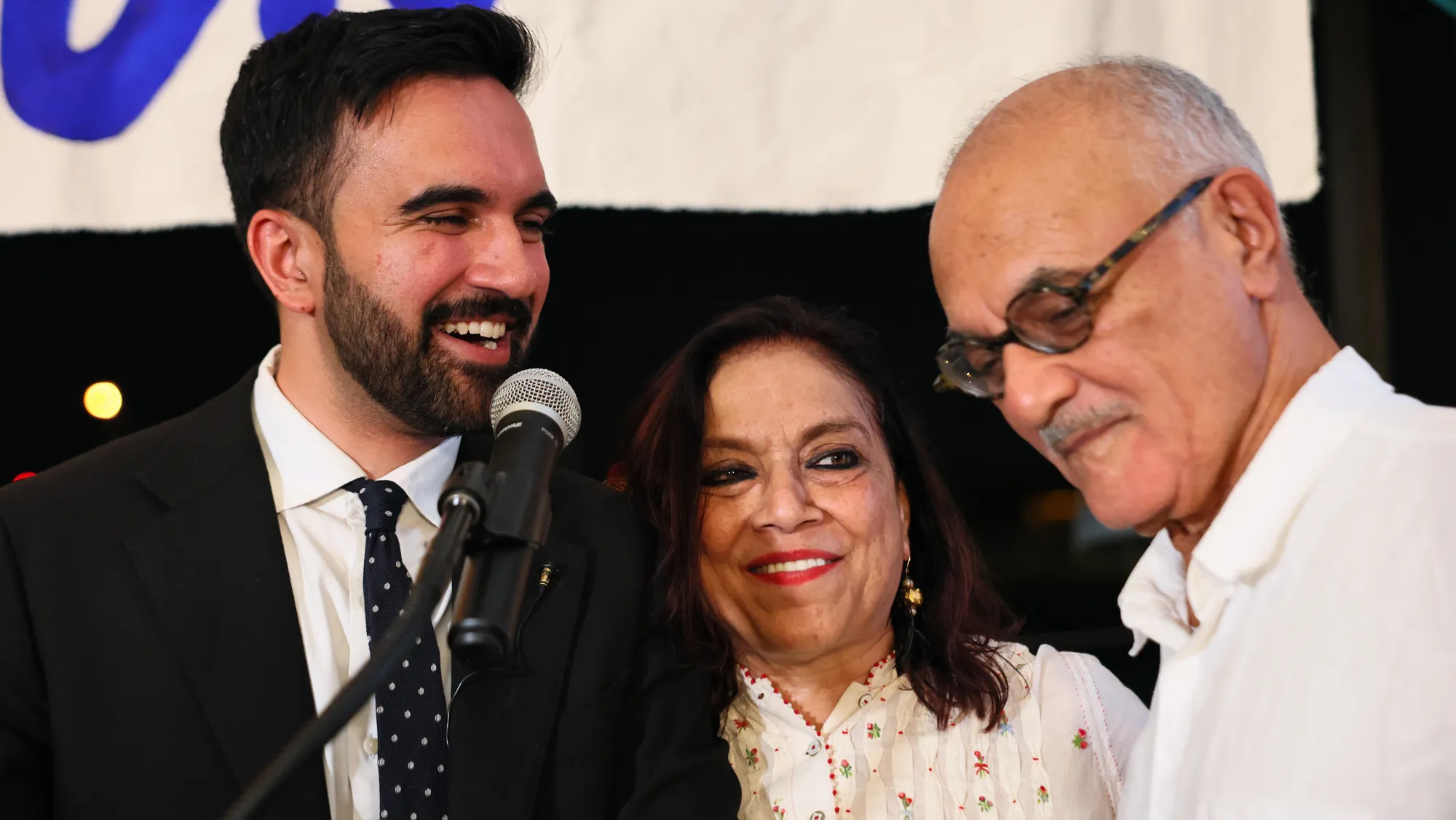
As I mentioned, I don’t know all the facts, or much about Zohran’s explanation of them. I am not equipped to describe what he did as a "lie" but I would believe that he didn't intend it to be one. And this post isn't necessarily about him, only.
I will say that as someone who began uni in the early 80s, I was totally confused about how to classify myself, plus I hated classifications anyway, but would learn why they matter in applications. There have been times in US census history when it was suggested we as South Asians mark ourselves as Caucasian/White, or Other. Asian was considered more a race than an ethnicity. The case of Bhagat Singh Thind, who was denied US citizenship more than once in the 1920s because he put "White" on his application but was not considered as such, is an example of just how problematic classifications based on race and ethnicity were, and still are not just for applications, but how we identify ourselves and how people see us.
When I applied to uni, I identified myself as Asian. Asian, as a "classification" raises questions because it is perceived more as a race than an ethnicity. If I were to ask, describe an Asian, more often than not East Asian, Chinese, and Southeast Asian persons would come to mind. Neither Indians or Pakistanis, nor Afghanis would have, and those considered "Middle Easterners" wouldn't have either. More than a few Americans when they think of Asian, it's their physical features that come to mind more than place or heritage. There is a difference between race and ethnicity but they have been used interchangeably and we need to recognize the difference between the construct created by men (race), and what we inherit from our ancestors and the land (ethnicity).
Moving to our little town in Oregon, where some didn't know where Pakistan was, there were some who thought I was Mexican because of my brown skin. Some would begin speaking to me in Spanish and I'd have to apologize and tell them I didn't speak it. Those who didn't know my origins didn't always believe me, and I felt it was unnecessary to prove my identity. When I got to university, and identified myself as Asian, as a Pakistani, my Asian-ness was questioned as well. I didn't "look like" I was. It was always strange to me that for decades, South Asians were referred to as British Asians in the United Kingdom, but it took decades and decades for us here to be included as Asians for the US Census. That began in 1980.
I've learned quite a bit of Spanish since then, but communication is still an issue. It has to do with how fast my mind can register what my ears hear (not very fast!).
. . . . .
Ages ago, my sister and I were asked to join a Black women's group. The women who were the organizers intended for it to be exclusive, and there was some pushback when a white woman wanted to join (and she did). The first meeting my sister and I attended without the white sister, and the subject of membership came up, my sibling voiced that we probably shouldn't be part of the group either.
"Oh no!" The president exclaimed, "You're Black. You are Black!"
. . . . .
In graduate school, I was friends with two Somali brothers. One evening, we were at one of our neighborhood bars and for some reason the subject of race classification came up. I was trying to explain that for whatever purpose, we were considered as Caucasian/White. I mentioned the Census, and old texts I read, when one of the brothers, the poet, the one I considered angrier, accused me of wanting to identify as white. He was furious. "You're Black! Why would you have ever said you were white?"
"I didn't say I was white. I'm saying that's what we were told we were. That was what I read in one of the books a long time ago."
He was done. He waved me away and told me not to talk to him. His older brother, the bombastic, beloved of many, gave me a little smile, and with a nod of his head indicated that I should leave their table.
I was crushed. It took me a while to recall and realize I had told them I wasn't Black. I don't know if that was what sparked his disgust or not. I wasn't denying my solidarity or assuming privilege. I'm a Brown ally and kin. I always have been and always will be. And that's what I'd understood my Black sisters thought when they accepted my sibling and me into the group. We may be differentiated by a shade or more of brown, but in many cases there's more of a gap and that has to do with each of our collective experiences and how much of white supremacy we have internalized. I'm not saying that to separate or alienate myself, personally. That is the route many South Asians have chosen. I have chosen to remain an ally, and I know that if I should take a misstep, a Black sibling will be there either to correct me with love, or choose that moment to remind me of how different I am. Misunderstandings will happen. And ruptures where one cannot see beyond the hurt to repair it
This reminds me of the film Mississippi Masala, and the scene where the rupture happens between Jay and Okelo (Spoiler Alert!). Okelo tries to protect Jay from incurring the wrath of Idi Amin, as tensions between Africans and Ugandan Asians rose significantly and to the point where Amin called for the latter's expulsion. Thousands and thousands of Asians had to leave their homes. When Okelo tells Jay that "Africa is for Africans. Black Africans," the latter is devastated. He believes Okelo thinks the same way as Amin, and ends their friendship. For me, this was one of the saddest parts in the film.
In the moment of sadness and regret with which I left things with my friend, I took him literally at his word when he told me not to talk to him, or that he didn't want to talk to me. I didn't talk to them for weeks even though we all continued to hang out at the same bar. I probably could have apologized to him days later, and we would have been fine. And we were fine after that. Without apology.
Mum thought the older Somali brother was Indian when she first saw him. And after both he and I had seen bell hooks give a talk at school, the older brother told me hooks reminded him of Mum. I didn't see it.
. . . . .
I am Asian. Zohran Mamdani, on any application, is Asian, and African, if they're asking for ethnicity. And for people to jump on a report whose source is a white supremacist is all we need to know about where we are in these United States right now. Frankly, the New York Times is hardly the bastion of integrity at this point, and no, this news was not fit to print. This news report was fit to be from colluders with white supremacists. Who do you think race classifications came from in the first place?