
On colonization and partitions
I have been thinking about British colonization a lot, as the Genocide in Gaza continues, unabated. And I've been thinking about it both in terms of how land acquisition and the "forced" movement of people took place both in the Indian "subcontinent" and in Palestine/Israel. Certainly, there are other lands once colonized by the British where such movement took place (the United States, right?) in Asia as well as Africa, and I am curious now regarding studies of comparisons and contrasts (perhaps mainly contrasts) in this subject matter. At this point, I can talk more about the partition of India than I can Palestine/Israel, and both of these are more complex events than I can address in the time and space I am in at the moment.
Partition, as we refer to the events that divided the Indian "subcontinent" into Pakistan (both East and West) and India deserves more than oversimplification, given its complexities. For this post though, I won't delve into the complexities. The Hindus and Sikhs who fled Pakistan (mainly via the Radcliffe Line, the border that divided Punjab between India and Pakistan), and the Muslims who fled India (mainly via the Radcliffe Line, as well) were "forced" to do so not necessarily by the established governments per se, but by communal violence which the governments were unable to control. They left houses, and loved ones behind. While some have wanted to reclaim their ancestral homes, they have not been able to due to laws enacted by both countries, as well as the ongoing tension (read: enmity/animosity) between Pakistan and India. While fleeing communal violence, thousands upon thousands (the total estimate is 1 million, approximately) of South Asians lost their lives as a result of the massacres during Partition.
There has been debate as to whether to name the violence during Partition as genocide, but the massacres in the Punjab have been referred to as retributive genocide
My Christian family, both maternal and paternal, chose not to leave Pakistan. Not that the Christian community didn't have fears as well (which would be realized in the years to come), but Jinnah must have reassured Christian leaders enough to where they elected to stay in Pakistan (and also voted for the division of the Punjab). Having said that, throughout the years that Pakistan has been an independent nation, Christians, as well as fellow Pakistanis either persecuted for their faith, or affected by laws and institutional policies that do not favor them in advancement in the educational and employment sectors, have made the difficult decision to leave Pakistan, including my immediate family and a number of relatives.
. . . .
India and Pakistan's independence was the result of a very long non-violent (and sometimes violent) struggle against the British Empire, which didn't grant us our "freedom" simply out of the goodness of their hearts, but also the realization that World War II had exhausted them financially to the extent where ruling over colonies would be severely curtailed. Which is not to say that anti-colonial struggles were not successful. They did bring about certain changes in British policies in India, including Indian participation in governance to some extent. However, the desire to grant India dominion status before the end of the war made the drive for Pakistan more real, and vital to achieve before the withdrawal of the British, mainly due to Jinnah and Muslim leaders' fears about Hindu domination in provincial governments as the British began relinquishing authority in certain areas of governance.
There have been vigorous arguments between Indians and Pakistanis in regard to whether Muhammad Ali Jinnah really wanted Pakistan to be an Islamic state or a secular one. I've written in an earlier post how I believe he wanted a secular state based on his address to the Constituent Assembly. If his thought process began differently and evolved into secularism based on his knowing that religious minorities would remain, and if he continued to appease Muslim (Islamist. Note: not all Muslims are Islamists) leaders in speeches that prove to both Indians and Islamists otherwise is not something I can assume without further study.
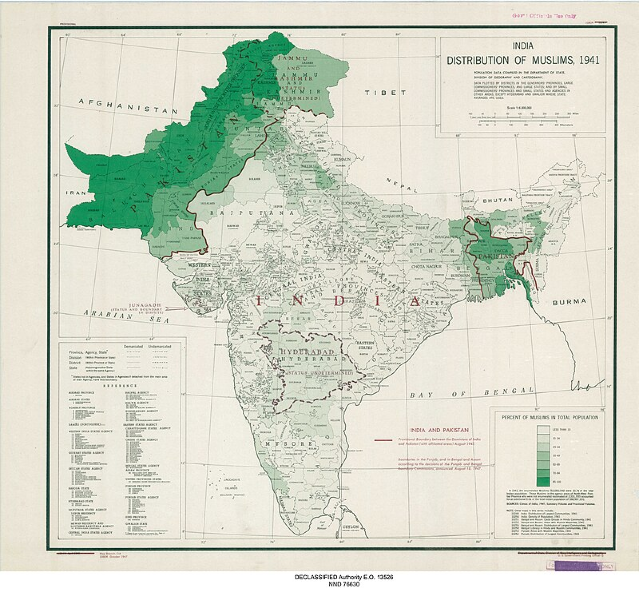
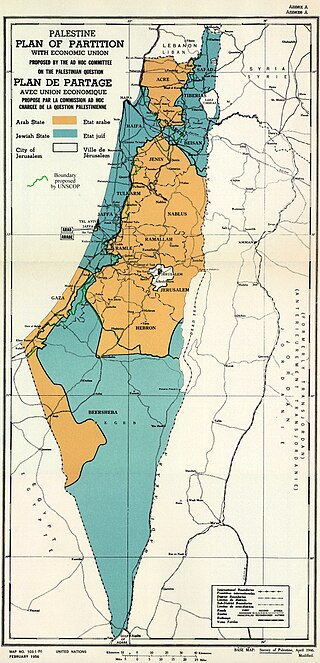
The main similarity that is apparent to me in regards to British colonization, both in India and Mandatory Palestine (besides 1947 and partition plans) is how inept and in some cases, devious, British administrations were in their exits from both places. It may be the only similarity. The ethnic cleansing of Palestinians known as Nakba (both Muslim and Christian) that began in 1948 is ongoing. I'm not discounting the violence committed by both sides in massacres prior to the Nakba. I'm not even denying the existence of Israel as a state. But it is difficult, nay, impossible, with the Zionist drive to bomb and starve Palestinians out of Gaza in real time, to blame this solely on Hamas, deadly and harmful as they have been before and on October 7, 2023. Not when the desire to continue settler expansion and colonization has already been there. Not when the desire to drive Palestinians out as retributive genocide has finally become reality.
As I write this I have been seeing images of Palestinian children in Gaza who have died of starvation. Images of adults who have little to no light in their eyes as they are going hungry. The Israeli government who has dehumanized all Palestinians in Gaza is allowing this to continue. The world powers are allowing this to continue. If this is how they exercise their might, then shame on all of us. And those who think this is part of god's plan, you have no earthly or beyond idea. This is how the Nakba is continuing and will continue unless more nations like the Hague Group step up and forward and do more to end this. But the Palestinians cannot wait for food that long.
. . . . .
Nixon, D. (2023) 'Exploring the legacy of partition through inherited memories', Ethical Space: International Journal of Communication Ethics. Edited by T. Scholfield-Peters, 20(4).
Most of my information on Partition has been greatly supported by this: (https://en.wikipedia.org/wiki/Partition_of_India#).
I also owe gratitude to this Wikipedia page re: the Nakba
(https://en.wikipedia.org/wiki/Nakba).